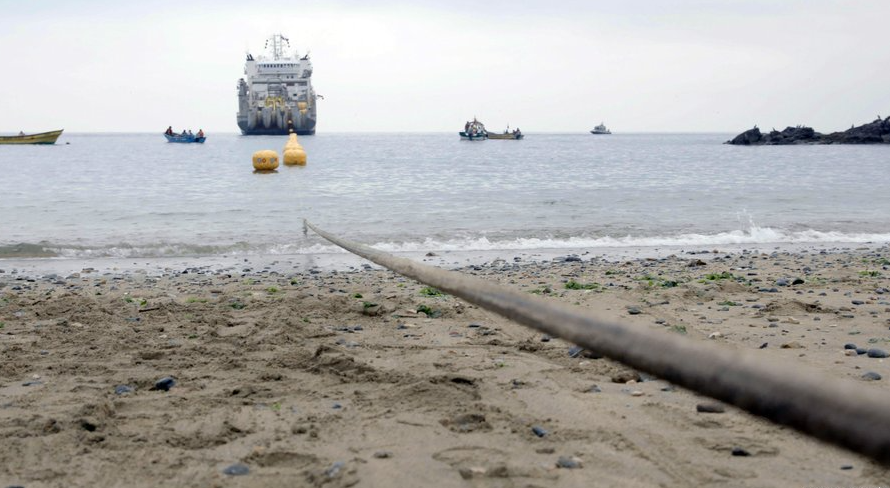
Google announced the launch of a submarine cable project called “Sol”, designed to respond to the growing demand for AI and cloud computing services. The transatlantic cable, which connects the United States, Bermuda, the Azores and Spain, “Sol” means the “sun” and symbolizes its layout as sunlight covering key network nodes. Once completed, the project will significantly enhance Google ‘ s international network capacity, reduce delays and enhance stability.
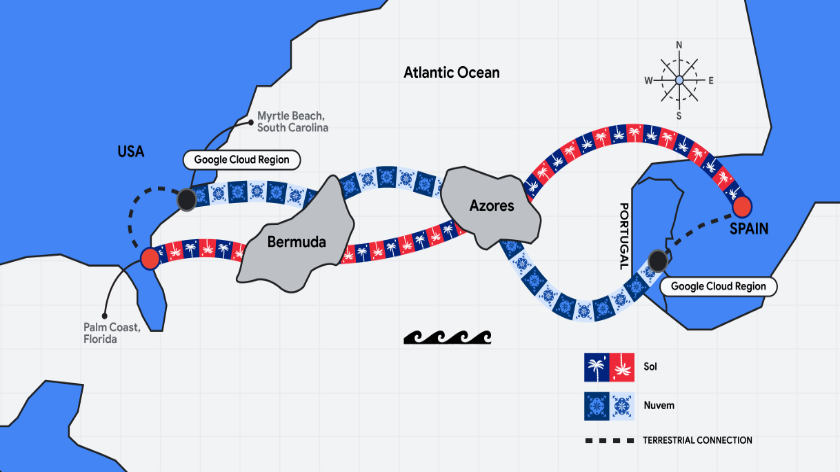
Sol-optic cable from Palm Coast, Florida, United States, via Bermuda and the Azores, eventually links Santander, Spain. This will be the only active fibre-optic line in Florida to Europe. Google worked with the United States infrastructure provider DC BLOX to establish a new cable landing and connection centre on Palm Coast and plans to build a landline extension to South Carolina to optimize network coverage in the south-eastern United States. This submarine fibre-optic cable, consisting of 16 pairs of fibre-optic fibres and manufactured by the United States, is intended to provide high capacity and reliability, to complement the Nuvem project announced in 2023 and to build a transatlantic network structure. Sol ‘ s land and seabed interconnections with Nuvem have increased the redundancy of the transatlantic network and ensured the stability of services in the event of cable breaks or malfunctions.
With the proliferation of AI model training and cloud services, Google needs to expand the global network of low-delayed, high-bandwidth. The Sol project will support the growth needs of its 42 cloud regions, particularly in the United States and European markets. The co-worker project was welcomed by the Governments of Portugal, Bermuda, the Azores and Spain as a catalyst for regional innovation and economic development. The implementation of the Sol project will further consolidate Google ‘ s competitive advantage in the global cloud service market, especially in the AI-driven digital transformation wave. Its success, however, depended on the pace of construction, regulatory approval and stability of the geopolitical environment. It is expected that the project will be gradually operational in the coming years to provide more efficient connectivity experience for Google clients.

Related Posts