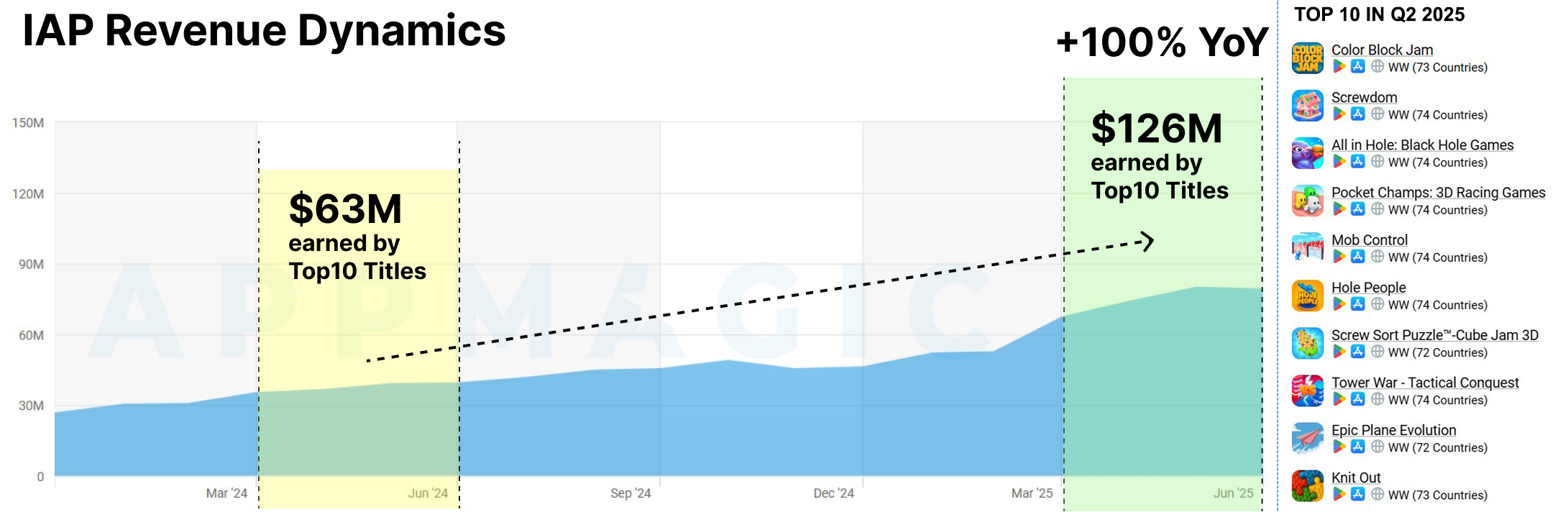
According to the latest report published by AppMagic in the second quarter of 2025, the performance of mixed leisure games in the global mobile game market has been impressive, with the application of internal purchase income (IAP) increasing by 100 per cent over the same period, from $63 million in the same period in 2024 to $126 million. Thanks to the combination of leisure games, which are based on traditional super-recreational games and incorporate more sophisticated progressive mechanisms and liquidity strategies, the retention rate of players and the willingness to pay for them have increased significantly.
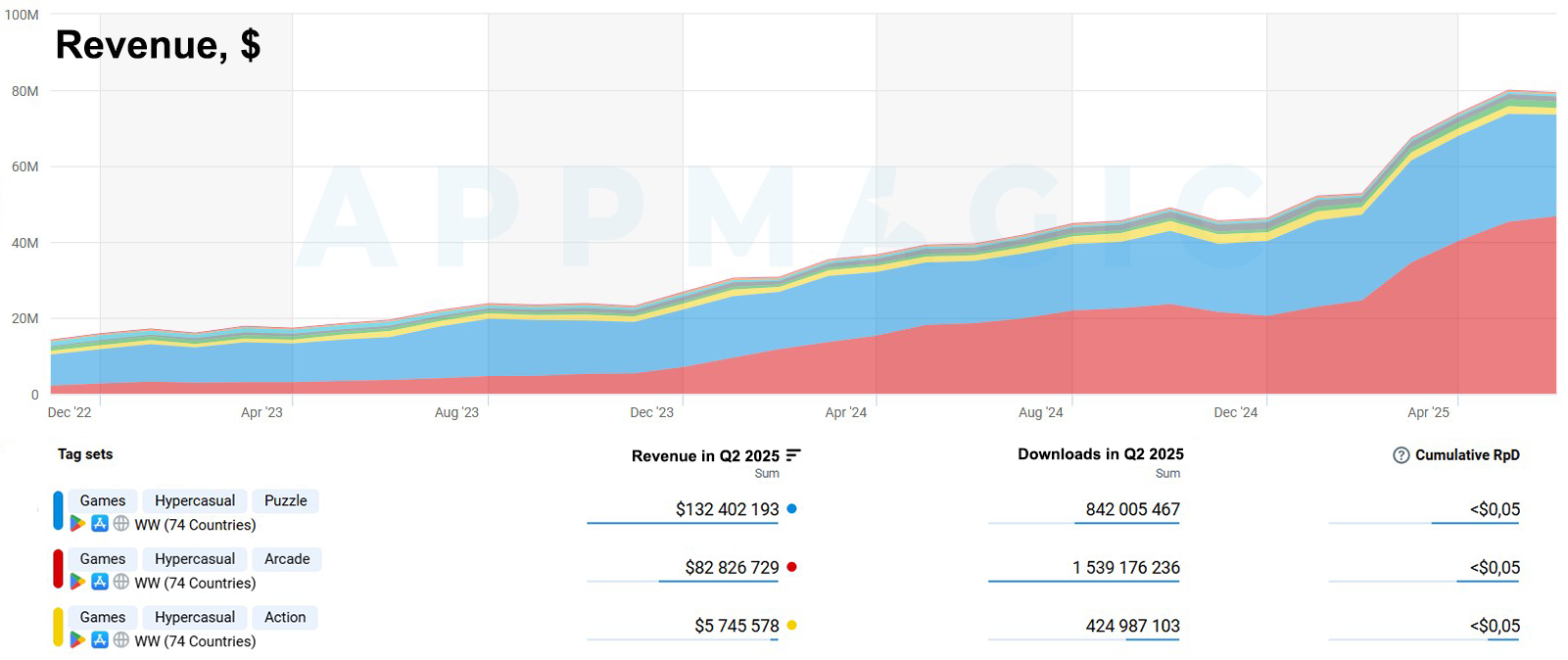
The puzzle game continued to lead in the second quarter, contributing more than 51 per cent of the total income from mixed leisure games, up from 48 per cent in the first quarter. The report states that the three sub-types of the puzzle play are particularly prominent:Square puzzle game(a) 71 per cent of the earnings of the puzzle game, which attracts a large number of players through simple and easy-to-hand play and deep-step mechanisms;Screw puzzle game20% contribution to the rapid rise of innovative declassification mechanisms;Catalogue puzzle game9 per cent, attracts leisure players through a light-quantification classification.
Street games are the second largest, contributing 35 per cent of their income, which perpetuates their strong position in the mixed leisure market. By contrast, action games account for only 2 per cent and lag far behind the puzzle and street games, indicating that they have less liquidity in mixed leisure.
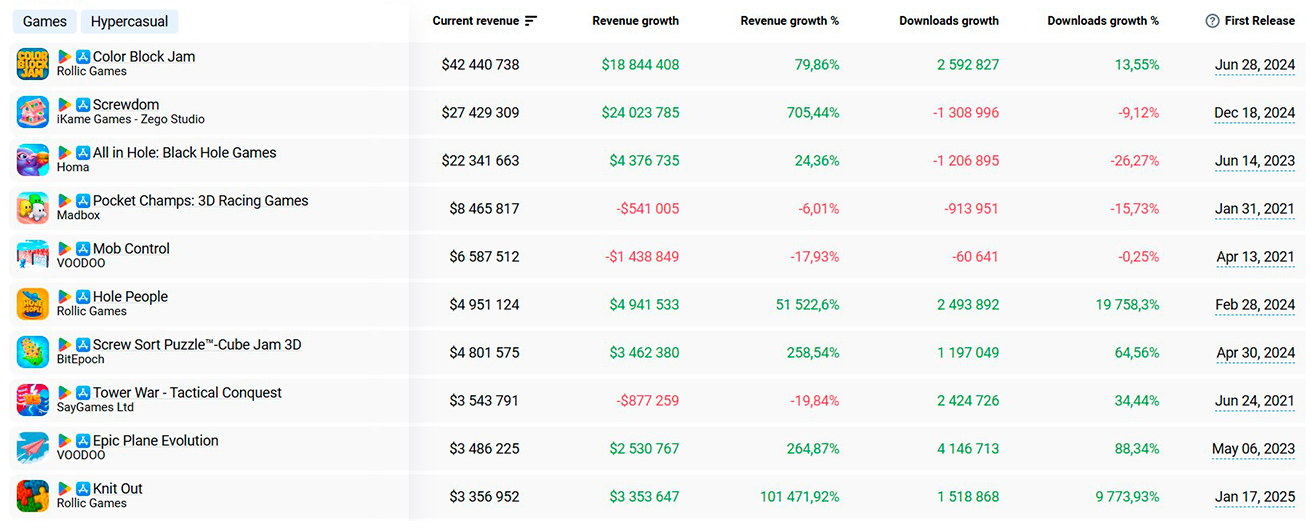
AppMagic reports that the best-selling mixed leisure games in the second quarter of 2025 have continued the strong performance of the first quarter and have also emerged. Here are the top three games:
The Turkish game giant Rollic received $42.4 million from Color Block Jam, an increase of 66 per cent in the ring. Since its release in December 2024, Color Block Jam has maintained strong growth through its unique square puzzle and the LiveOps framework, which is slightly quantified. The game produces a mixture of IAP and game ads (IAA) by limiting the session to bypass and purchaseable reinforced props.
The Screwdom, the largest technology company in Viet Nam, iKame Gomes, received $27.4 million in the second quarter, an increase of 705 per cent in the ring. Screwdom ‘ s surge in income is due to its innovative screw puzzle mechanism, which combines a steep and difficult curve to motivate players to invest time and money. The game quickly attracted high-paying users through IAP-driven liquidity patterns and a light-quantitative LiveOps activity.
All in Hole earned $22.3 million, a 24 per cent increase in the ring. All in Hole was launched by Homer, a French developer of leisure games, and designed with Hole at its core, in combination with a mixed-deficit model, succeeded in maintaining a steady income growth.
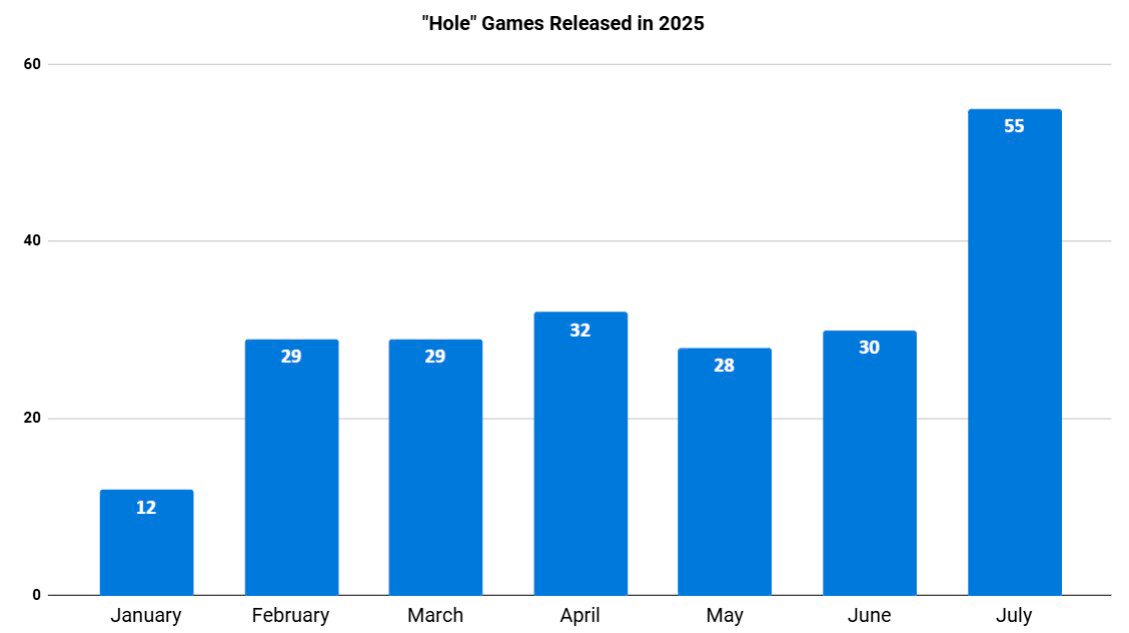
The AppMagic report mentioned in particular that in the first seven months of 2025, the number of new games based on the “hole” keyword had surged to 215, a 14-fold increase over the same period in 2024, with 55 being issued in July alone. These games, which focus on the mechanisms for swallowing or filling “holes”, combine simple operations and incremental difficulties and attract a large number of leisure players.
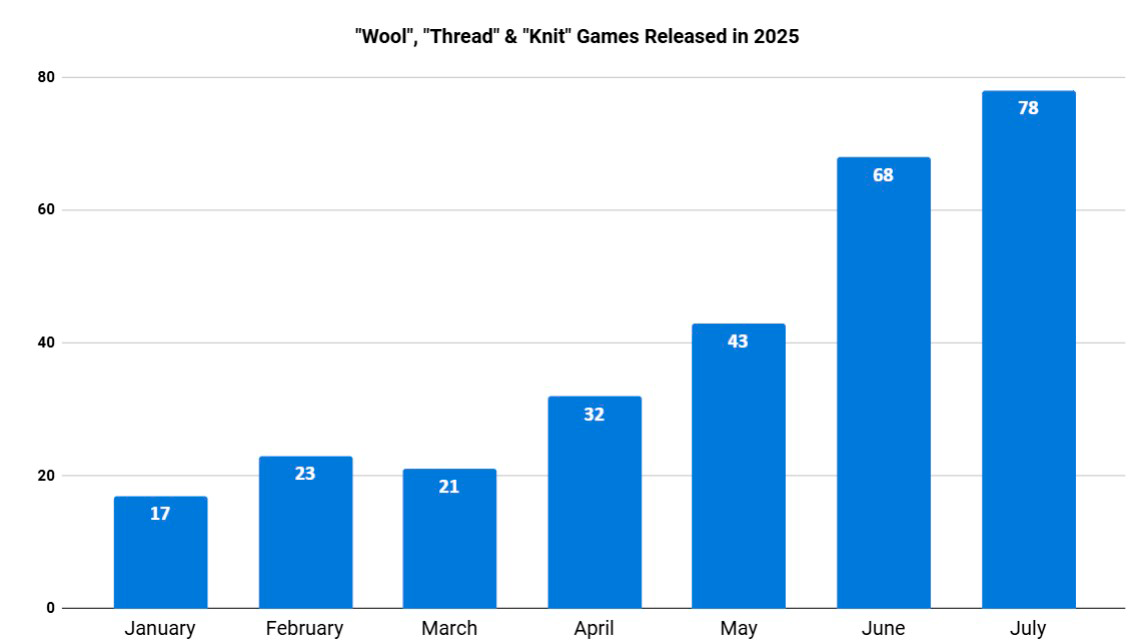
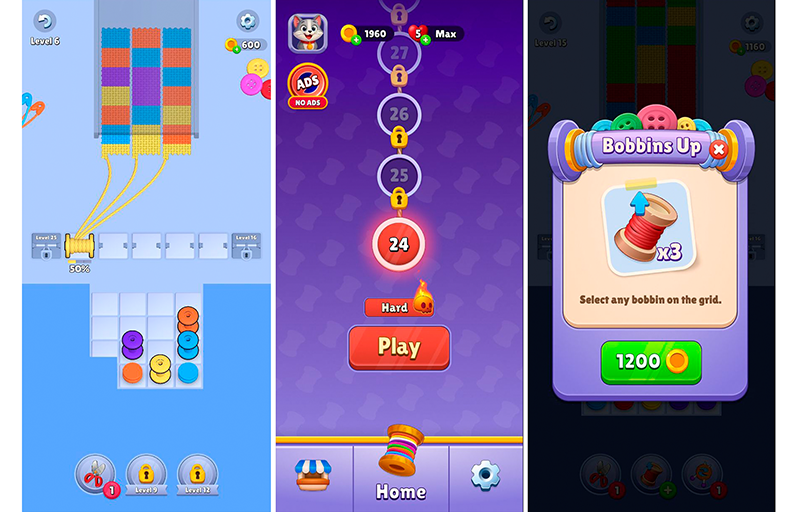
Similarly, the “wool”, “thread” and “knit” types of games have also seen a dramatic increase. In the first seven months of 2025, 282 such games were issued, of which more than half were in June (68 sections) and July (78). These games, which are usually centred on light-quantitative weaving or entanglement, meet the needs of the player for a relaxing game through visual attraction and low-threshold interactive design.
The growth of income from mixed leisure games depends on their innovative liquidity and LiveOps strategies. The report notes that the integration of IAP and IAA has become a frame. Color Block Jam balances the revenue from advertising and payment through failure of the gate and the purchaseable outlet, and significantly increases the player retention rate.
Daily and hourly events have increased by 18 per cent and are key to increased player participation. Competitive mechanisms dominate 40 per cent of activities, while the “Merge” mechanism is increasingly at the centre of routine events. Although festivals are concentrated mainly on popular festivals (e.g. Valentine’s Day, 66 per cent of games are involved), IP cooperation is still low, with only a few games participating in a year-long branding.
The rise of mixed leisure games is in the context of declining downloads of ultra-recreational games. According to AppMagic data, in the third quarter of 2023, the download of ultra-recreational games decreased by 8 per cent, while mixed-recreational games grew by 30 per cent in 2023 and accelerated further in 2024. This trend reflects the player ‘ s preference for a more in-depth and retention mechanism, with mixed leisure games that have successfully filled market vacancies by introducing neutral nuclear elements, such as hierarchies and social functions.
However, the market is increasingly competitive. In 2025, revenues from the global mobile game market are expected to reach $103 billion, and mixed leisure games will need to find differential positioning in high-income categories such as euphoria, street machines and so forth. In addition, the rapid emergence of new games may lead to the risk of content homogenization, and developers need innovative mechanisms and high-quality LiveOps to remain competitive.
For the global mobile game industry, the success of mixed leisure games not only reshaped the business model of leisure games, but also provided new strategic directions for developers. In 2025, when competition is high, developers of player behaviour data, a combination of innovative play and localization strategies will take the lead in this rapidly growing market.

Related Posts